Burst Pipe Leak Detection in Lakewood, CA
Water where it shouldn't be, but no burst you can see? Our acoustic and thermal tools trace the leak to the exact spot, so the repair opens the smallest possible area.
Leak detection that sees through walls
A hidden burst rarely announces its exact location. Water travels along pipes, framing, and slabs, so the stain you see can sit several feet from the actual break. Our job is to close that gap before anyone picks up a saw.
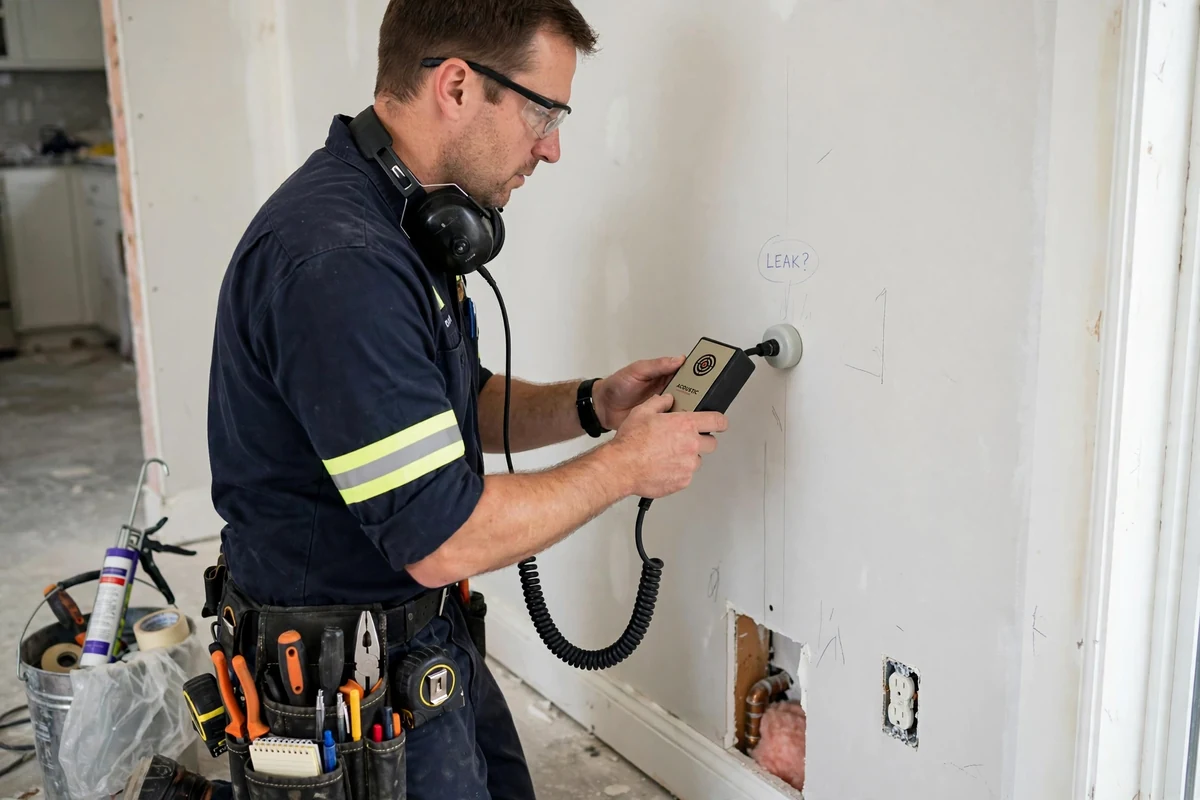
Acoustic listening
Pressurized water escaping a pipe makes a distinct sound, a hiss, a whoosh, a faint vibration. Our listening equipment picks it up through drywall, tile, and concrete, and the signal grows strongest right above the break. It is the fastest way to zero in on a leak you can't see.
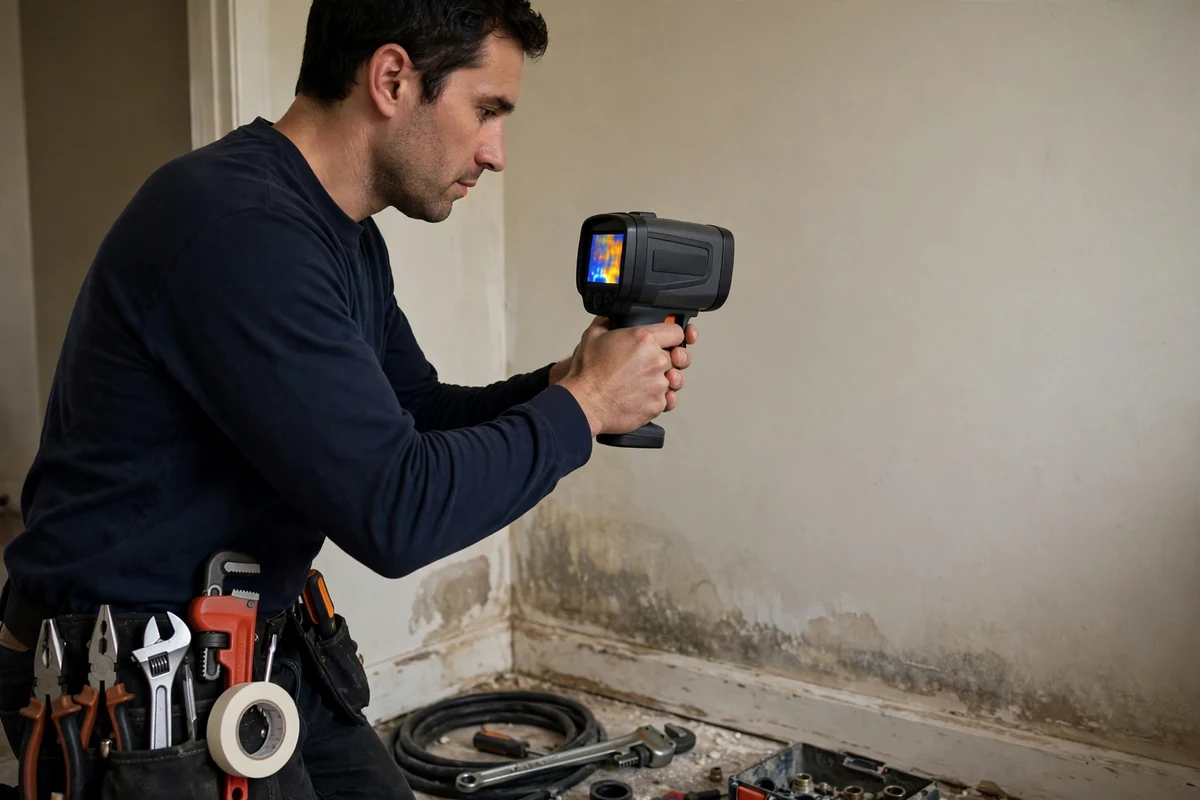
Thermal imaging
A thermal camera reads surface temperatures and reveals what eyes miss: a cold streak trailing across a wall where water is moving behind it, or a warm patch on a slab where a hot-water line is leaking underneath. The pattern shows both the leak and the path the water is taking.
Moisture mapping
Handheld moisture meters confirm which surfaces are actually wet and how far the dampness spreads. That matters because the wettest spot is not always the break, mapping the moisture gradient leads us back to the source instead of the symptom.
Camera inspection
For lines we can access, a small inspection camera goes inside the pipe and shows us the interior directly: a split, a separated joint, heavy corrosion, or a pinhole spraying into the wall cavity. What we see on screen tells us exactly which repair the pipe needs.
Seeing water where it shouldn't be? Call and describe what you're seeing — we’ll tell you the safest next step.
Call (562) 245-5416When a hidden leak is the likely culprit
Not every burst floods a room. Many leaks run silently for weeks before they show themselves. If you recognize any of these, detection is the right first step, not a repair guess.
A water bill that jumps for no reason
Usage that climbs while your habits stay the same usually means water is leaving the system somewhere it shouldn't. The EPA notes that household leaks can waste a remarkable amount of water, and your meter is the witness.
The sound of running water with everything off
Stand in a quiet house with every fixture closed. If you hear hissing or rushing behind a wall, that's pressurized water escaping. This is the single clearest sign of a hidden burst.
Damp spots, stains, or bubbling paint
Discolored patches on walls or ceilings, paint that bubbles or peels, and baseboards that swell all signal water moving where it shouldn't. The stain marks the water's arrival, not necessarily the break, which is exactly why detection comes first.
Pressure that drops suddenly
A shower that goes weak overnight or faucets that sputter can mean a burst line is venting pressure into a wall or the ground. If the drop affects the whole house, the break is usually on the main side.
Warm spots on the floor
A patch of tile or laminate that feels warm underfoot points to a hot-water line leaking beneath the slab. Pets love these spots; homeowners should treat them as a warning, not a curiosity.
Musty smells that won't clear
Water trapped in wall cavities feeds mold growth within a day or two. A persistent musty odor in one area, especially near plumbing runs, deserves a moisture check before it becomes a bigger problem.
When to call right away
If you hear active water behind a surface, see water pooling with no source, or your meter spins with every fixture off, don't wait for more evidence. Shut off the main valve if you can reach it, then call us at (562) 245-5416, our Lakewood burst pipe repair team treats these calls as emergencies.
How a detection visit works
One visit, one technician with the full toolkit, and a clear answer at the end of it.
You describe the symptoms
Where you noticed water, when it started, what changed. Your observations tell us which lines to check first.
We scan and listen
Acoustic sensors, thermal camera, and moisture meters work the suspect areas. We mark the strongest signals as we go.
We confirm the source
Readings get cross-checked, a sound peak plus a thermal pattern plus a moisture gradient means we've found it, not just a damp patch.
You get a repair plan
We show you the location, explain what failed and why, and lay out the repair options before any cutting begins.
Find it first, fix it once
Detection is the difference between one small, clean repair and a week of opened walls and still-damp drywall.
Without precise location, a repair crew works by inference: open where the stain is, hope the break is nearby, open again when it isn't. Every extra opening is more patching, more paint, more disruption to your home. Detection flips that order, locate first, open once, fix it, patch it, done.
It's also how the right repair gets chosen. A pinhole in aging copper calls for a different answer than a split in a slab line, and our copper pipe repair and slab leak repair work both start with knowing exactly what failed. When the break is on the line from the street, water line repair follows the same rule: find the break, then dig in the right place.
A small leak never stays small. Call before a pinhole becomes a flood.
Call (562) 245-5416The meter test you can do yourself
Turn off every faucet, appliance, and irrigation valve. Note the number on your water meter, then use no water for an hour. If the reading changes, water is leaving your system, you have a leak, and detection will tell you where. If the meter has a small leak-indicator dial, watch that too: any movement with everything off means flow.
Leak detection questions
What homeowners ask before booking a detection visit.
How do you find a leak inside a wall without opening it?
We use acoustic listening devices, thermal imaging cameras, and moisture meters to trace the leak's exact location through the wall surface. We only open the wall where the repair actually happens, a small, controlled opening that we patch back afterward.
Can you tell the difference between a slab leak and a wall leak?
Yes. The signs point in different directions: warm spots on the floor and water under the slab suggest a slab leak, while stains on a wall or ceiling point to a line inside the framing. Our meters and thermal scans confirm which one it is before any work begins.
My water bill jumped but I see no water. Could it be a hidden leak?
It is one of the most common causes. Try the meter test: turn off every fixture, note the meter reading, wait an hour without using water, and check again. If the dial moved, water is escaping somewhere and you likely need a detection visit.
Will leak detection damage my walls or floors?
No. Detection itself is non-invasive, our tools listen and scan through surfaces. If a repair is needed, we open only a small section at the confirmed spot and patch it back when the pipe is fixed.
Do I need detection before a repair?
Whenever the break is not visible, yes. We locate the leak first on every such job, because repairing the wrong section wastes time and leaves the real leak running. Detection is part of how we keep repairs precise.
What should I do while waiting for the technician?
If you can, shut off the main water valve to stop the damage from spreading. Keep clear of any areas where water meets outlets or wiring, and do not start opening walls or floors yourself, untouched surfaces make detection easier.
A hidden leak won't fix itself. Every day it runs, the damage spreads further through walls, floors, and framing. Let us pinpoint it and lay out the fix.
Call (562) 245-5416Contact Lakewood Pipe Rescue
Reach out any time, a real person answers and gets help moving.
Call
(562) 245-5416
Emergency line, call any time.
Visit
4400 Ladoga Ave
Lakewood, CA 90713, USA
[email protected]
We reply within one business day.
Prefer to talk it through?
Call and describe what you're seeing, water where it shouldn't be, a hissing wall, a sudden pressure drop. We'll tell you the safest next step before anyone rolls a truck.
Sources & Further Reading
Official references behind the facts on this page.
- U.S. EPA, Fix a Leak Week, household leak facts and the meter check.
- USGS Water Science School, how water moves through homes and plumbing.
Links open official sources in a new tab. We re-check them yearly.