Copper Pipe Repair in Lakewood, CA
Copper lasts for decades, until pinhole leaks and corrosion start eating through it. We find the failed sections, cut them out, and solder in sound copper that holds.
Pinhole leaks: diagnosis first
The most common copper failure we see is also the sneakiest: a pinhole no wider than a pinhead, spraying a fine mist inside a wall for weeks before anyone notices.
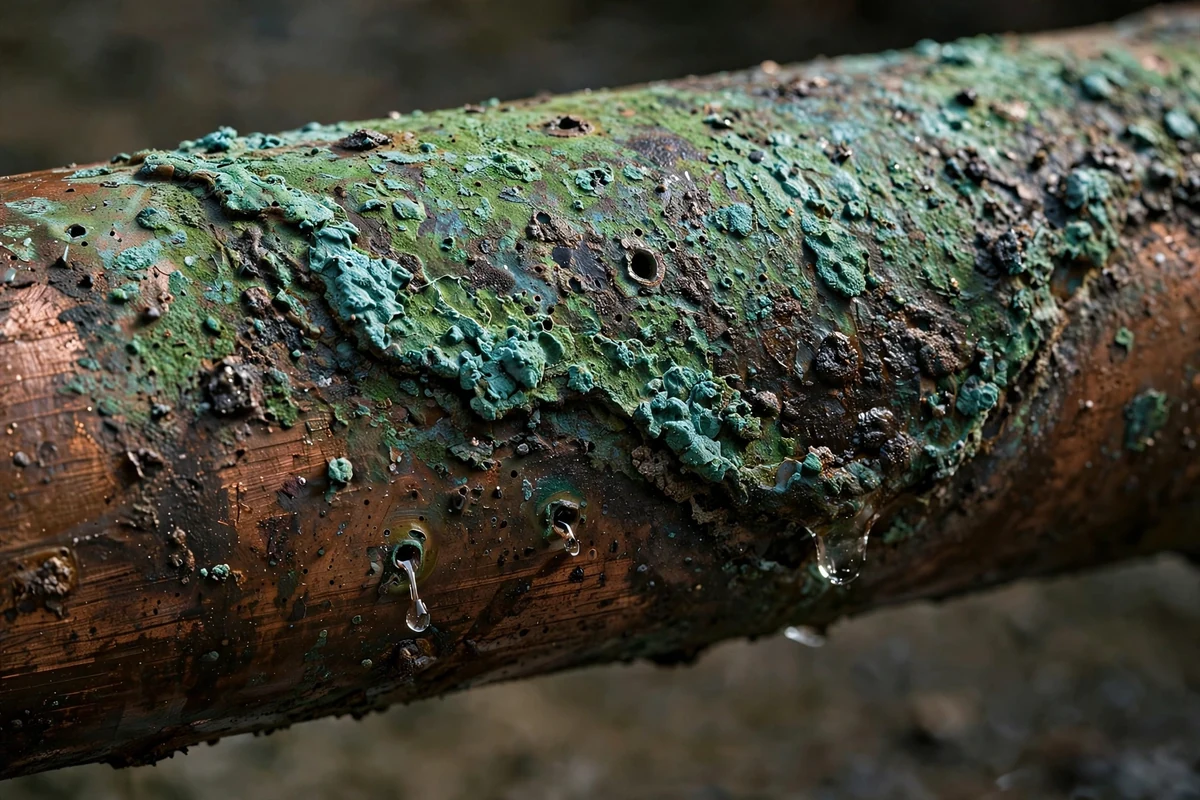
A pinhole starts as pitting on the inside of the pipe wall. Water chemistry, chloramine disinfectants, or high pressure eat a tiny crater from within until it breaks through. The first sign is usually a damp patch that never quite dries, a faint hiss behind drywall, or a green-blue crust forming on exposed copper in a garage or crawl space. That crust is the calling card, copper reacting with water and air at the exact point of failure.
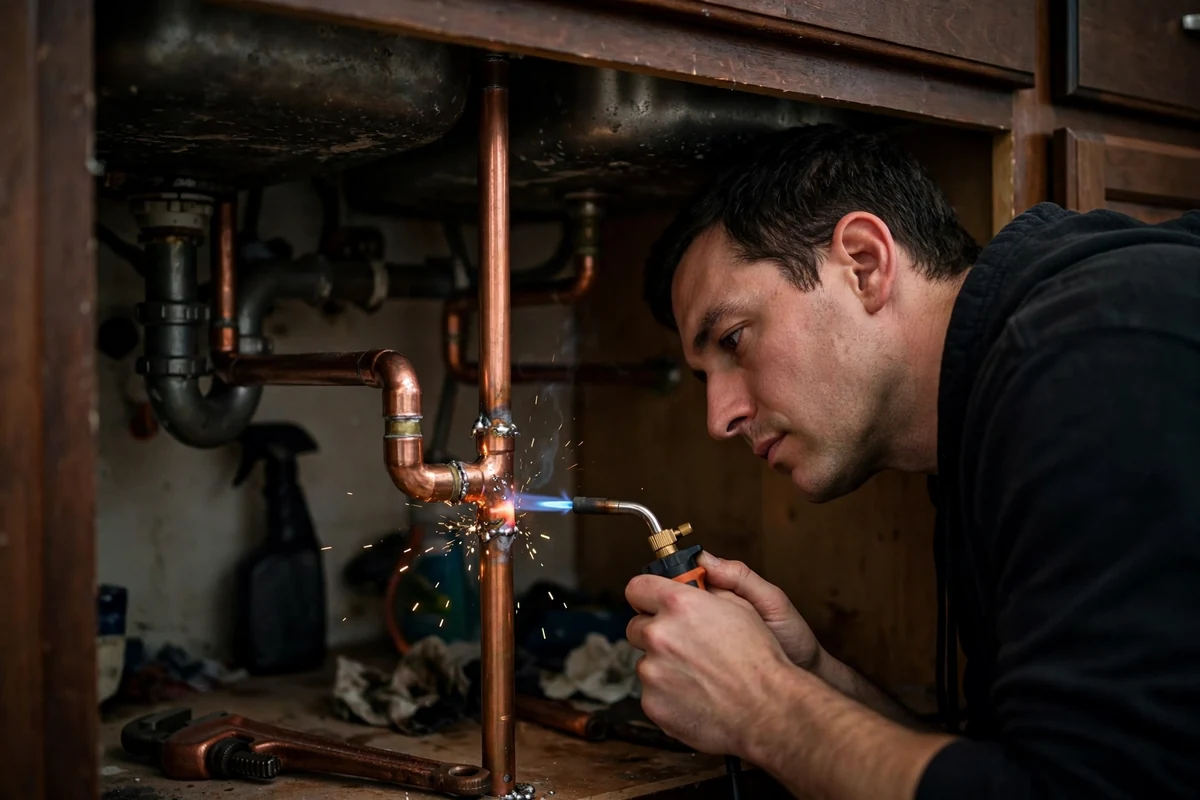
Our burst pipe leak detection visit confirms the location with acoustic and moisture readings before anything is cut. Then the repair is straightforward: we shut off the water, drain the line, cut out the perforated section with margin on both sides, and solder in new copper of the same diameter with lead-safe solder. Every joint gets pressure-tested before the wall goes back together.
One pinhole or a pattern?
This is the question that decides everything. A single pinhole in healthy copper is a repair. Multiple pinholes, green crust along long runs, or paper-thin walls across a whole line mean the pipe is failing everywhere at once, and we will show you what we find so you can choose between another repair and a whole-house repipe. We don't push either way; the pipe tells us.
Hissing wall? Damp patch? Pressure drop? Call and we’ll help you figure out what’s happening.
Call (562) 245-5416How we fix copper lines
The right method depends on what failed and how much of the run is compromised.
Pinhole spot repair
For a single perforation in otherwise sound copper: we cut out the damaged segment with clean margin on each side and solder in a new copper section with couplings. Quick, contained, and pressure-tested the same day.
Section replacement
When corrosion or thinning runs along several feet of pipe, we replace the whole affected run rather than patching a series of weak points. One solid new section beats three band-aids side by side.
Failed joint repair
Soldered joints can fail from a cold original joint, excess flux left behind, or years of pressure hammering. We cut back to sound pipe on both sides and re-solder with proper fittings and lead-safe solder.
Split line repair
A full burst, a split along the pipe or a separated joint, gets an emergency section replacement. We stop the water, cut out the destroyed length, and rebuild that portion of the line so the rest of your plumbing comes back online.
Why copper corrodes in the first place
Repairing the pipe without understanding the cause just schedules the next leak. Here is what actually eats copper in local homes.
Water chemistry
Acidic or aggressive water pits copper from the inside out. Disinfectants like chloramines, used by many municipal water systems, can also attack copper over time. The inside of the pipe thins long before anything shows on the outside.
High water pressure
Pressure above safe levels hammers joints, elbows, and thin spots with every fixture cycle. Copper under constant high pressure develops pinholes and split seams far earlier than it should. A regulator check belongs in any copper diagnosis, see our water pressure regulator installation page.
Age and thin walls
Copper doesn't rust, but decades of water flow slowly erode the interior wall. In homes with original mid-century plumbing, walls that started thick are now thin enough that a pit becomes a pinhole with nothing left to resist it.
Dissimilar metals
Where copper meets steel or galvanized fittings without a proper dielectric union, galvanic corrosion sets up, the two metals essentially form a battery, and the copper side loses. We see this at old water heater connections and mixed-material repairs done years ago.
Don’t wait for the flood. One call gets help moving to your door.
Call (562) 245-5416Clean solder work, tested before we leave
Copper repair is a craft job. The difference between a joint that holds for decades and one that weeps in a year comes down to preparation.
We cut back to bright, sound copper on both sides of the damage, never soldering to pitted or thinned pipe. Fittings get cleaned and fluxed properly, joints are heated evenly, and lead-safe solder is drawn fully into the joint. Then we restore pressure and watch: every repair is tested at working pressure before we patch the wall, so a weeping joint is caught in our presence, not discovered by your drywall.
If the inspection shows your copper is failing in multiple places, we'll talk honestly about whole-house repiping with PEX, and if the damaged run is the main from the street, water line repair may be the right conversation instead. Either way, you see the evidence first.
Copper repair questions
Straight answers before you book.
What does a pinhole leak in a copper pipe look like?
A pinhole leak is a tiny perforation in the pipe wall that sprays a fine mist or thin stream of water. Look for green-blue crusty buildup on the copper, a damp patch on drywall that never fully dries, or a faint hissing behind a wall. The crust forms where water and air have been reacting with the copper over time.
Can one pinhole leak be fixed, or does the whole pipe need replacing?
A single pinhole in otherwise healthy copper can be repaired by cutting out the damaged section and soldering in a new piece. But when we find multiple pinholes, widespread green corrosion, or thin pipe walls along a run, that signals the whole line is failing, and we will tell you so before we start.
What causes copper pipes to corrode?
The usual causes are water chemistry (acidity and chloramine disinfectants can pit copper from the inside), high water pressure hammering joints and bends, age thinning the walls, and contact with dissimilar metals setting up galvanic corrosion. Poor installation practices like excess flux left in joints can also start the process.
Is a corroded copper pipe an emergency?
Not always immediately, but it should not wait long. A pinhole that sprays today can become a split that floods a wall cavity tomorrow. If you see green crust, hear hissing, or find unexplained dampness, call us before it escalates.
Will the repair match my existing copper pipe?
Yes. We cut out the failed section and solder in new copper of the same diameter, using lead-safe solder and proper fittings. The repair is pressure-tested before we close the wall.
At what point should I repipe instead of repairing?
When leaks keep returning in different spots, when corrosion shows along long runs, or when the pipe walls have thinned throughout. At that point repeated spot repairs cost more and solve less than a whole-house repipe, and we will show you the evidence so you can decide with confidence.
Small leaks turn into big ones. A pinhole spraying inside your wall today is a split flooding it tomorrow. Let us find it and fix it properly.
Call (562) 245-5416Contact Lakewood Pipe Rescue
Reach out any time, a real person answers and gets help moving.
Call
(562) 245-5416
Emergency line, call any time.
Visit
4400 Ladoga Ave
Lakewood, CA 90713, USA
[email protected]
We reply within one business day.
Prefer to talk it through?
Call and describe what you're seeing, green crust on copper, hissing behind a wall, a damp patch that won't dry. We'll tell you the safest next step before anyone rolls a truck.
Sources & Further Reading
Official references behind the facts on this page.
- U.S. EPA, Lead in Drinking Water, why lead-safe materials matter in plumbing work.
- City of Lakewood, CA, local permit and plumbing code information.
Links open official sources in a new tab. We re-check them yearly.