Whole-House Repiping in Lakewood, CA
When leaks keep coming back in different rooms, the problem isn't one pipe, it's the system. We replace aging plumbing with a full PEX repipe, planned run by run.
Signs your home is ready for a repipe
One leak is a repair. A pattern of failures is a verdict. Here's how to tell which one you're dealing with.
Leaks keep appearing in new places
The clearest signal. You fix a pinhole in the bathroom wall, then one opens behind the kitchen, then another in the garage. The pipes aren't having bad luck, the whole system has reached the end of its life.
Discolored water at several fixtures
Brownish or yellowish tint when you first turn on taps in different rooms means corrosion is flaking off inside aging lines throughout the house. It's not a single bad section; it's system-wide.
Pressure dropping house-wide
When every shower runs weaker than it used to, corrosion and mineral buildup have narrowed the interior of the pipes everywhere. No single repair restores flow that's being choked along the whole system.
Visible corrosion along long runs
Green crust on copper or rust flaking off galvanized lines in the garage, crawl space, or attic shows you what the hidden sections look like too. Exterior corrosion is a window into the whole run.
Your plumbing is 40+ years old
Galvanized and early copper systems in mid-century homes are simply at the end of their working life. Age alone doesn't force a repipe, but age plus any of the signs above makes the case.
Repairs are becoming routine
When you're on a first-name basis with your plumber and the drywall patch count keeps climbing, add up what the next three spot repairs would run you, then compare that to solving it once.
Not sure yet? Get an honest assessment
We'll inspect your visible plumbing, check pressure at multiple points, and tell you plainly whether your system has years left or is failing. If copper pipe repair will genuinely buy you time, we'll say so, a repipe should be a confident decision, not a pressured one.
Seeing water where it shouldn't be? Call and describe what you're seeing — we’ll tell you the safest next step.
Call (562) 245-5416How we repipe a house
A repipe is a planned operation, not demolition. Every run is mapped before a single opening is cut.
Map the runs
We trace every line from the main to each fixture and plan new PEX routes through attics, crawl spaces, and wall cavities, minimizing openings from the start.
Stage the work
Floors and furniture get protected. Openings are cut only at planned access points, and we keep your existing water running as long as possible.
Run the PEX
New PEX lines go in run by run, hot and cold to every fixture. Old pipes are disconnected and abandoned in place, drained and capped.
Switch over and test
The new system is pressure-tested end to end, then we make the final switchover. Every fixture is checked, openings are patched, and the site is cleaned.
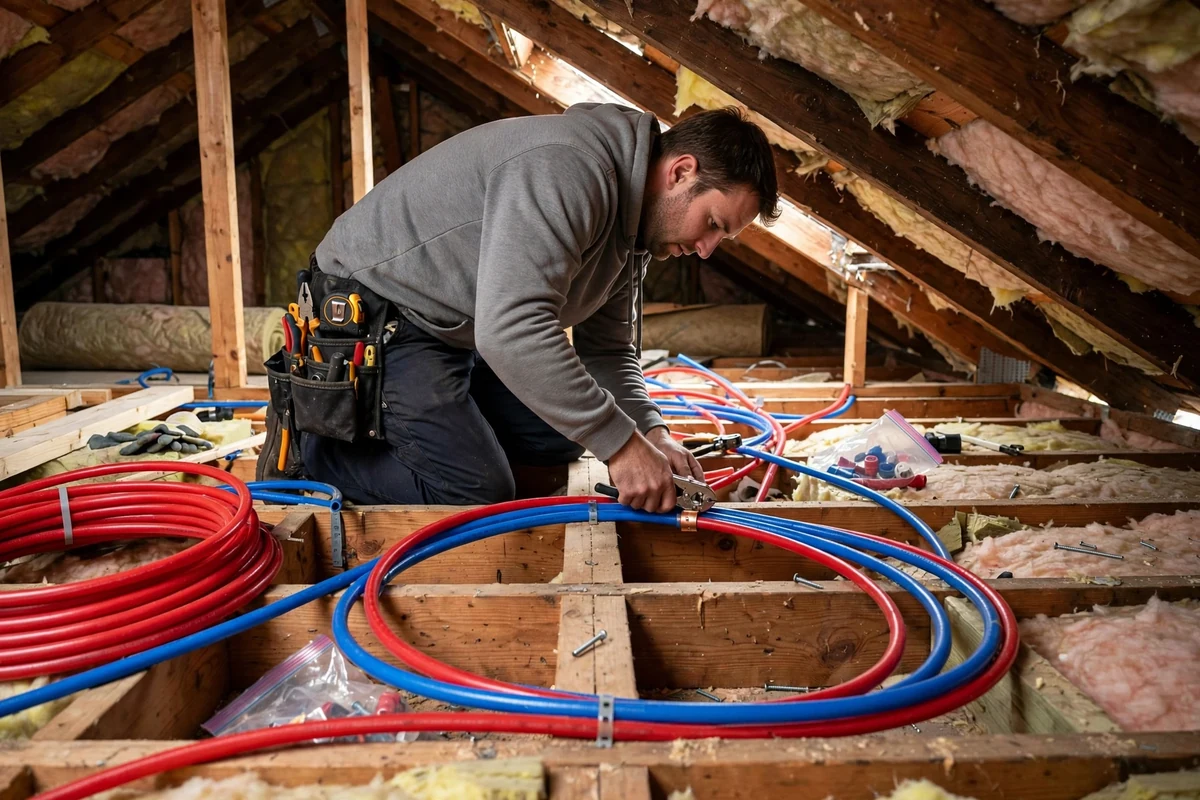
Why PEX is our featured repipe material
Copper is a fine pipe, it's just that PEX solves the exact problems that kill copper.
Corrosion can't touch it. The pinhole leaks and interior pitting that destroy aging copper don't happen in PEX. Water chemistry, chloramines, and acidic supply simply have nothing to react with.
Far fewer joints. PEX bends and flexes around corners where copper needs an elbow and two solder joints. Every joint we don't install is a future leak point that never exists. Long continuous runs mean the system has dramatically fewer places to fail.
It flexes under stress. Ground movement and pressure surges that crack rigid pipe are absorbed by PEX's flexibility. In a region where soil shifts and water pressure runs high, that forgiveness matters.
Cleaner installation. Because PEX threads through cavities instead of requiring straight soldered runs, we open far less drywall. Less opening means less patching, less dust, and a shorter disruption to your home.
We'll install copper on request if you prefer it, but for a full repipe, PEX is what we'd put in our own homes, and it's what we recommend for yours. Homes with galvanized supply lines get the same treatment through our galvanized pipe replacement work.
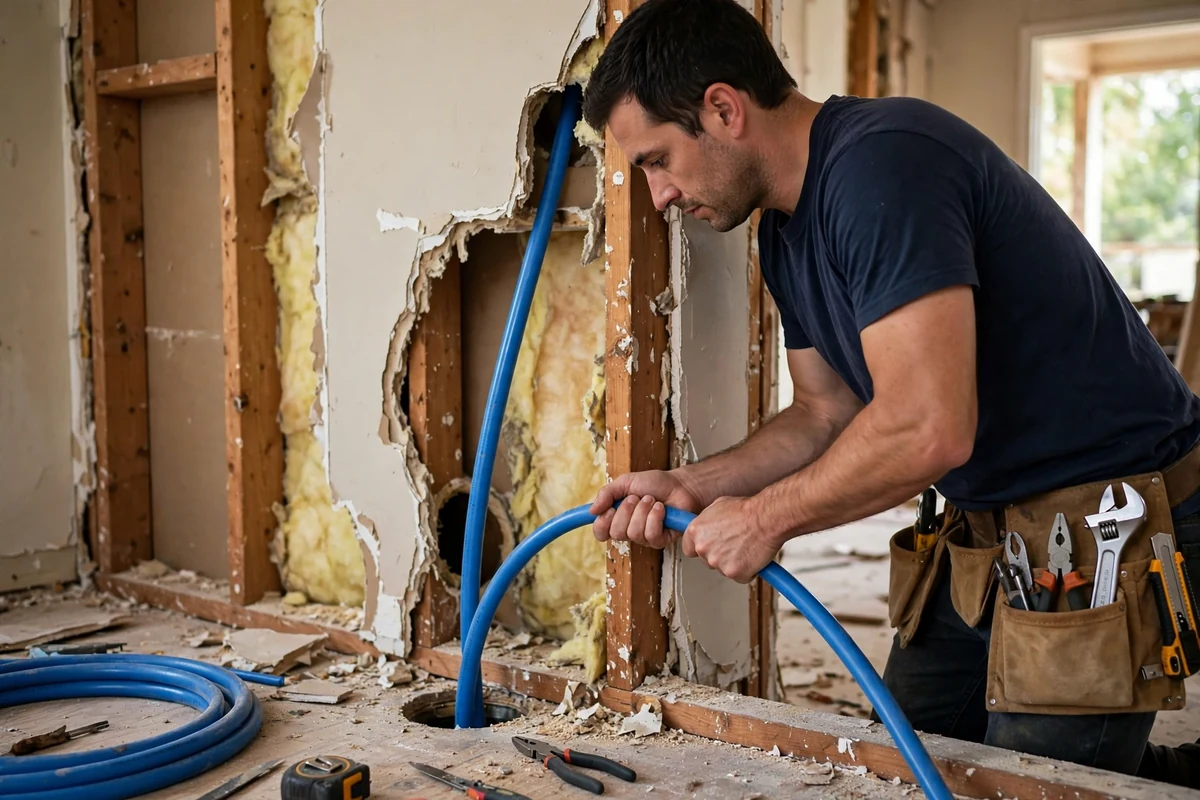
What to expect during your repipe
A repipe disrupts, but a planned one disrupts far less than most homeowners fear.
Your daily life continues
You can stay in the home. Water stays on except during scheduled connection windows, which we tell you about in advance. Expect noise and some dust during work hours, we protect floors and clean as we go.
Old pipes stay where they are
We don't gut your walls to haul out every old line. The failing system is disconnected, drained, and abandoned in place. The new PEX system takes over completely, and the old pipes simply rest.
Every opening gets patched
Access points are cut at planned locations, kept as small as the work allows, and patched back when the run is done. You won't be left with open walls or a list of drywall contractors to call.
Pressure and flow, verified
Before we call it done, the new system is pressure-tested and every fixture is run, hot and cold, full flow. If anything underperforms, we fix it on the spot. Homeowners in Lakewood and across our service areas get the same walkthrough before we leave.
A small leak never stays small. Call before a pinhole becomes a flood.
Call (562) 245-5416Repipe questions
What homeowners ask before committing to a repipe.
How do I know my home needs a repipe instead of another repair?
The pattern tells you: leaks in different locations within a short time, discolored water at multiple fixtures, pressure that keeps dropping across the house, or visible corrosion along long pipe runs. When the system is failing everywhere at once, replacing it beats patching it.
Why do you feature PEX instead of copper for repipes?
PEX resists the corrosion and pinhole leaks that kill aging copper, flexes instead of bursting under stress, and installs with far fewer joints, fewer joints means fewer future failure points. It also threads through walls and attics with minimal opening, which keeps the job cleaner and faster.
Will you have to tear my house apart?
No. We plan each run to use attics, crawl spaces, and wall cavities, opening drywall only at planned access points. Every opening is patched back, and we protect floors and furniture while we work.
How long does a whole-house repipe take?
Most homes take one to three days of active work depending on size and layout. We keep your water on whenever possible during the process and schedule the final switchover so you are without water for the shortest stretch.
Do you replace the old pipes or leave them in place?
The old lines are abandoned in place, disconnected, drained, and left where they sit inside walls. Pulling them all out would mean opening every wall in the house. The new PEX system takes over completely.
Can I stay in the house during the repipe?
Yes, in most cases. There will be noise and some dust, and water will be off in stretches while we make connections, but you can live around the work. We will tell you in advance which hours the water will be off.
One repipe beats five more repairs. If your pipes keep failing in new places, let's look at the whole system and give you a straight answer about repiping.
Call (562) 245-5416Contact Lakewood Pipe Rescue
Reach out any time, a real person answers and gets help moving.
Call
(562) 245-5416
Emergency line, call any time.
Visit
4400 Ladoga Ave
Lakewood, CA 90713, USA
[email protected]
We reply within one business day.
Prefer to talk it through?
Call and describe what your plumbing has been doing, repeat leaks, brown water, fading pressure. We'll tell you honestly whether a repipe makes sense for your home.
Sources & Further Reading
Official references behind the facts on this page.
- U.S. EPA, Ground Water and Drinking Water, water quality factors that affect plumbing.
- City of Lakewood, CA, local permit and plumbing code information.
Links open official sources in a new tab. We re-check them yearly.