Water Pressure Regulator Installation in Lakewood, CA
Street pressure that runs too hot bursts pipes, hammers joints, and wears out every fixture in the house. One regulator on your main line brings it down to a safe, steady level, and keeps it there.
How High Water Pressure Bursts Pipes
Most homeowners never think about water pressure, until a pipe lets go. Here's what excessive pressure does to a plumbing system, day after day.
Your water utility delivers water at whatever pressure the street main carries, and that number varies by neighborhood, elevation, and time of day. In many parts of the Lakewood area, street pressure runs well above what household plumbing is designed to live with. Most homes are comfortable between 40 and 60 psi; plumbing code calls for a regulator when supply pressure exceeds 80 psi.
Pressure that high doesn't announce itself with a single dramatic event. It grinds. Every joint, elbow, and fixture seal in your home absorbs that extra force thousands of times a day, every faucet opened, every toilet flushed, every washing machine fill cycle. Old copper work-hardens and cracks at stress points. Corroded galvanized pipe, already thin from the inside, gives way at its weakest pit. Washing machine hoses bulge. Toilet fill valves chatter and fail. The water heater's relief valve starts weeping because the tank is absorbing pressure spikes it was never meant to hold.
Then there's water hammer, the bang or thud you hear when a faucet snaps shut. That's a pressure shockwave racing through the pipes, and at high static pressure those shockwaves hit much harder. Over time they loosen hangers, stress soldered joints, and turn a small weakness into a burst. A pressure regulator doesn't just lower the number on a gauge; it takes the daily beating off your entire system. It's the single most cost-effective protection you can give aging pipes, which is why we check pressure on every burst pipe and copper pipe repair call we run.
Don’t wait for the flood. One call gets help moving to your door.
Call (562) 245-5416Signs Your Home's Water Pressure Is Too High
High pressure leaves fingerprints all over a house. If you recognize two or three of these, get the pressure tested.
Banging or hammering pipes
A loud thud when a faucet or washing machine shuts off is a pressure shockwave, water hammer. Occasional light tapping is normal; sharp, house-shaking bangs mean the static pressure behind them is too high.
Toilets that run or refill on their own
Fill valves are built for normal pressure. When pressure runs hot, valves leak through, phantom-flush, or fail years early. If you've replaced more than one fill valve, suspect the pressure, not the toilets.
Dripping relief valve or leaking fixtures
A water heater temperature-and-pressure relief valve that weeps, faucet cartridges that fail early, supply lines that bulge, these are all pressure casualties. The fixtures aren't defective; they're being overworked.
Appliances dying young
Dishwashers, washing machines, and ice makers all have inlet valves rated for household pressure. Chronic overpressure shortens their working life, and the supply hoses feeding them are a leading cause of indoor flooding when they let go.
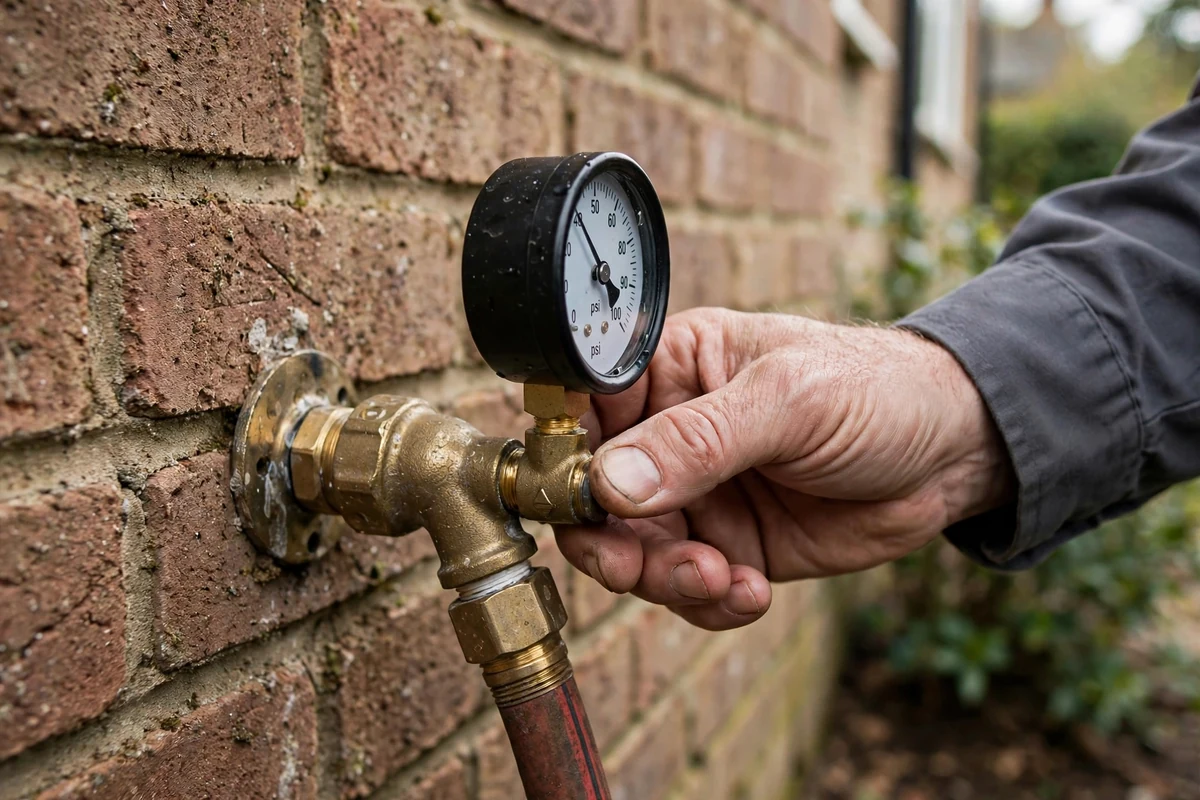
The definitive check takes sixty seconds: thread a pressure gauge onto an outdoor hose bib, open it fully, and read the number. Anything consistently above 80 psi means your home needs a regulator. We test pressure on every visit and set every regulator we install with a gauge on the line, no guessing.
What a Pressure Regulator Does on Your Main Line
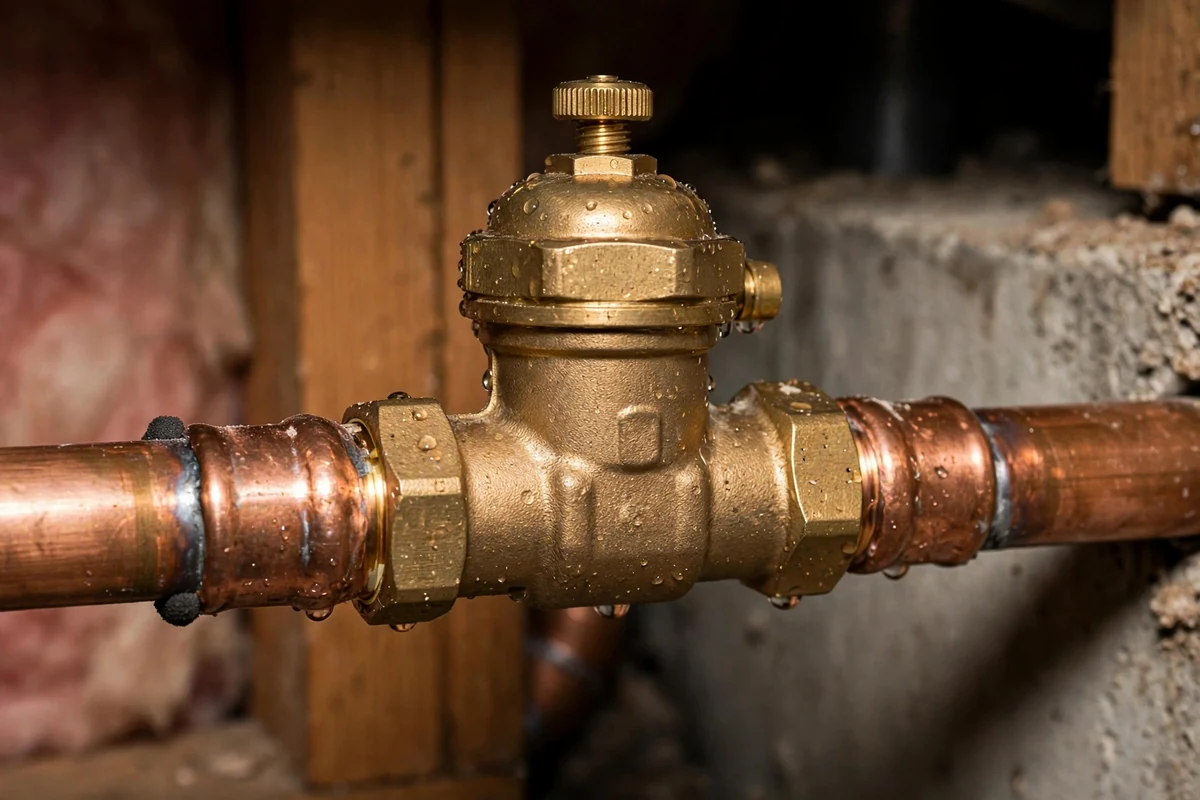
A pressure-reducing valve is a small brass device with one job: whatever the street sends, your house gets a steady, safe pressure.
Inside the valve, a spring-loaded diaphragm reacts to downstream pressure. When you open a faucet and house pressure dips, the valve opens wider to keep up. When everything's closed and pressure tries to climb, it throttles down. The result is pressure that holds steady whether one sink or every fixture in the house is running, no spikes, no sag, no hammer.
We install the regulator on the main water line where it enters your home, just downstream of the main shut-off valve so you can isolate it for future service. The valve is adjustable, so we dial your home to the sweet spot, strong, satisfying flow at the showerhead, without the destructive force behind it. Every installation gets pressure readings before and after, written down for you.
If your home already has a regulator and symptoms are back, the valve itself is the likely failure, springs weaken and diaphragms foul with sediment over about 10 to 15 years. We test first; if it's done, we replace it rather than asking you to live with the symptoms.
What to Expect When We Install Your Regulator
It's a compact job with an outsized payoff. Here's how the visit goes.
Test first
We gauge your static pressure at a hose bib and at an indoor fixture, and check for pressure creep that points to a failed existing regulator or thermal expansion issues.
Cut in the valve
Water off, main line cut, regulator fitted with proper unions on both sides so it can be serviced later without cutting pipe again. An accessible shut-off goes in with it if yours is old or buried.
Set the pressure
We dial the regulator to your home's target range with a live gauge on the line, then open fixtures all over the house to confirm pressure holds steady under real demand.
Verify everything
Every toilet, faucet, and hose bib gets run. We check for leaks at the new fittings, confirm the hammer is gone, and leave you the before-and-after readings in writing.
Don’t wait for the flood. One call gets help moving to your door.
Call (562) 245-5416Pressure Regulator Questions
What homeowners ask before getting their pressure under control.
How do I know if my home's water pressure is too high?
The classic signs: banging or hammering pipes when faucets shut off, toilets that run or refill on their own, a water heater relief valve that drips, faucets and supply lines that fail early, and sprinklers that mist instead of spraying. An inexpensive gauge on a hose bib gives you the real number in a minute, or we can test it during a visit.
What water pressure should a house have?
Most homes are comfortable between 40 and 60 psi. Plumbing code calls for a pressure regulator when the supply pressure exceeds 80 psi. Sustained pressure above that range stresses pipe joints, fixture seals, and appliance valves, and it is one of the main reasons old pipes burst.
How does a pressure regulator actually work?
A pressure-reducing valve sits on your main water line and throttles the incoming street pressure down to a steady, safe level for your home. A spring-loaded diaphragm inside the valve opens and closes as demand changes, so pressure stays constant whether one faucet or every fixture in the house is running.
Where does the regulator get installed?
On the main water line where it enters your home, usually right after the main shut-off valve, often in the garage, near the water heater, or in a crawlspace. It has to sit upstream of every fixture so the whole house benefits. We also install an accessible shut-off valve with it if your main valve is old or hard to reach.
How long does installation take?
A straightforward regulator installation takes about two to three hours, including cutting the main line, fitting the valve, setting the pressure, and testing every fixture. Your water is off only while we cut the line in, typically under an hour.
I already have a regulator. How do I know if it's still working?
Regulators wear out, the spring weakens and sediment fouls the diaphragm, usually over 10 to 15 years. If pressure symptoms come back in a home that has a regulator, the valve is the first suspect. We test the pressure, and if the regulator has failed, we replace it rather than trying to nurse it along.
High pressure is silent, until a pipe bursts. Get your pressure tested and a regulator installed, and give every pipe and fixture in your home a longer, quieter life.
Call (562) 245-5416Contact Lakewood Pipe Rescue
Reach out any time, a real person answers and gets help moving.
Call
(562) 245-5416
Emergency line, call any time.
Visit
4400 Ladoga Ave
Lakewood, CA 90713, USA
[email protected]
We reply within one business day.
Prefer to talk it through?
Call and describe what you're hearing or seeing, banging pipes, running toilets, fixtures failing early. We'll tell you the safest next step before anyone rolls a truck.
Sources & Further Reading
Official references behind the facts on this page.
- U.S. Environmental Protection Agency, WaterSense, household water pressure and efficiency guidance.
- IAPMO (International Association of Plumbing and Mechanical Officials), publishers of the Uniform Plumbing Code, including pressure regulation requirements.
- City of Lakewood, CA, local permits for plumbing modifications.
Links open official sources in a new tab. We re-check them yearly.