Galvanized Pipe Replacement in Lakewood, CA
Lakewood's 1950s galvanized steel pipes are decades past their design life. We replace corroded steel lines with clean copper or PEX, and the rust, the weak pressure, and the pinhole leaks go with them.
Why So Many Lakewood Homes Still Have Galvanized Pipe
Much of Lakewood went up between 1950 and 1953, and galvanized steel was the standard water pipe of that era. It did its job for decades. Now it's simply old.
Galvanized steel pipe is ordinary steel pipe dipped in a zinc coating. The zinc was supposed to slow corrosion, and it did, for about 40 to 50 years. Lakewood's original lines are now 70-plus years old, which means the zinc wore off long ago and the steel underneath has been corroding ever since.
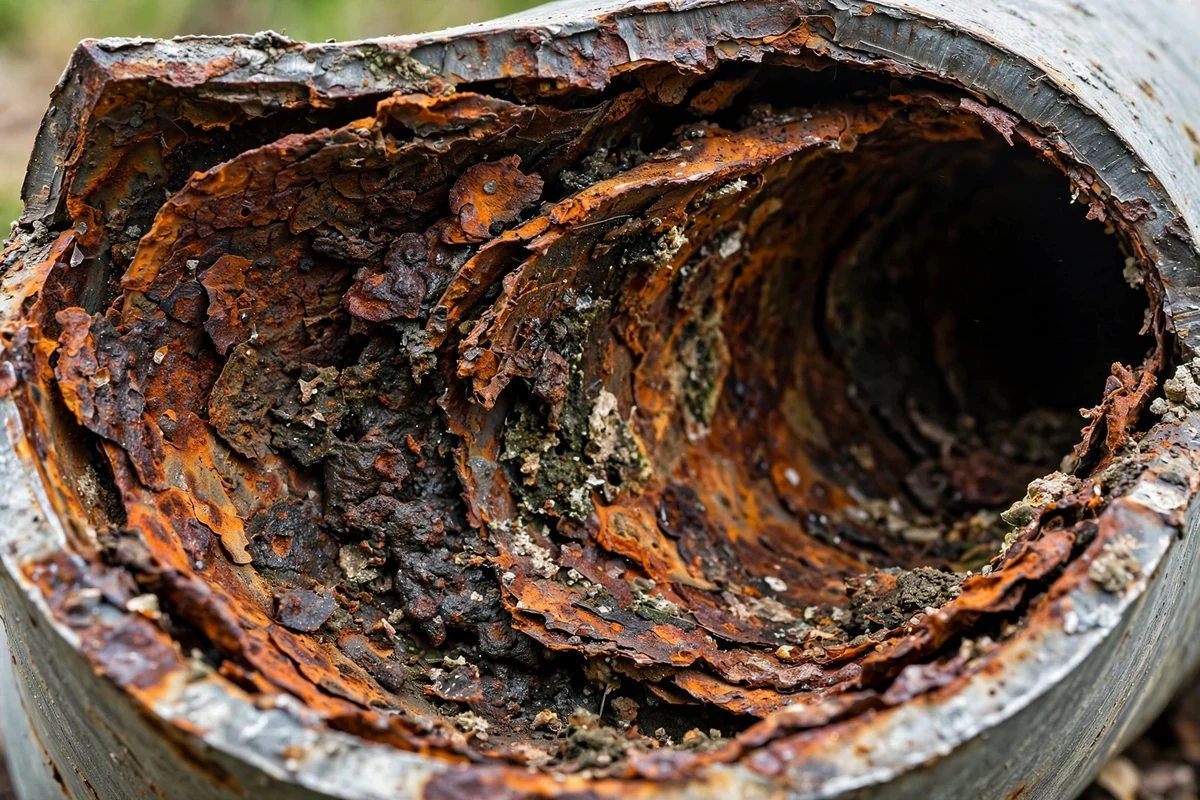
Here's the part most homeowners never see: the damage happens from the inside out. Rust and mineral scale build up along the inner walls, narrowing the pipe year after year. A line that started with a full three-quarter-inch opening can choke down to the width of a pencil. From the outside, the pipe looks fine. From the inside, it's a rust tube barely passing water, and the thinned walls are one pressure spike away from splitting.
That's why galvanized systems fail in clusters. The whole system aged together, so when one section springs a pinhole leak, the rest of it is in the same condition. Patching that one spot is honest work, but it doesn't change the calendar: more leaks are coming. If your home still runs on original galvanized plumbing, whole-house repiping with copper or PEX is the fix that actually ends the cycle.
A small leak never stays small. Call before a pinhole becomes a flood.
Call (562) 245-5416How Failing Galvanized Pipes Announce Themselves
Galvanized pipe rarely fails without warning. It sends signals for years, most homeowners just don't recognize them as pipe problems.
Rust-colored or murky water
Water runs brown or yellow for a few seconds when you first open the tap, then clears. That's rust flaking off the inside of the pipe every time water sits still, in the lines overnight, between uses. It means the corrosion is active, not historic.
Pressure fading house-wide
Showers that used to sting now dribble, and the kitchen faucet takes forever to fill a pot. When it's every fixture, not one aerator, the pipes themselves are narrowing. No fixture upgrade fixes pipe that's closing from the inside.
Pinhole leaks, then more pinholes
A damp spot inside a wall, a misting joint in the crawlspace, a stain blooming on the ceiling. Pinhole leaks are the signature failure of old galvanized pipe, tiny corrosion pits that finally punch through. One is a warning; two is a pattern.
Visible corrosion on exposed pipe
Flaking, crusty buildup or weeping joints on pipes you can see, in the garage, the water heater closet, under sinks. What you see on the outside is a fraction of what's happening inside the walls where you can't look.
How We Replace Galvanized Pipe
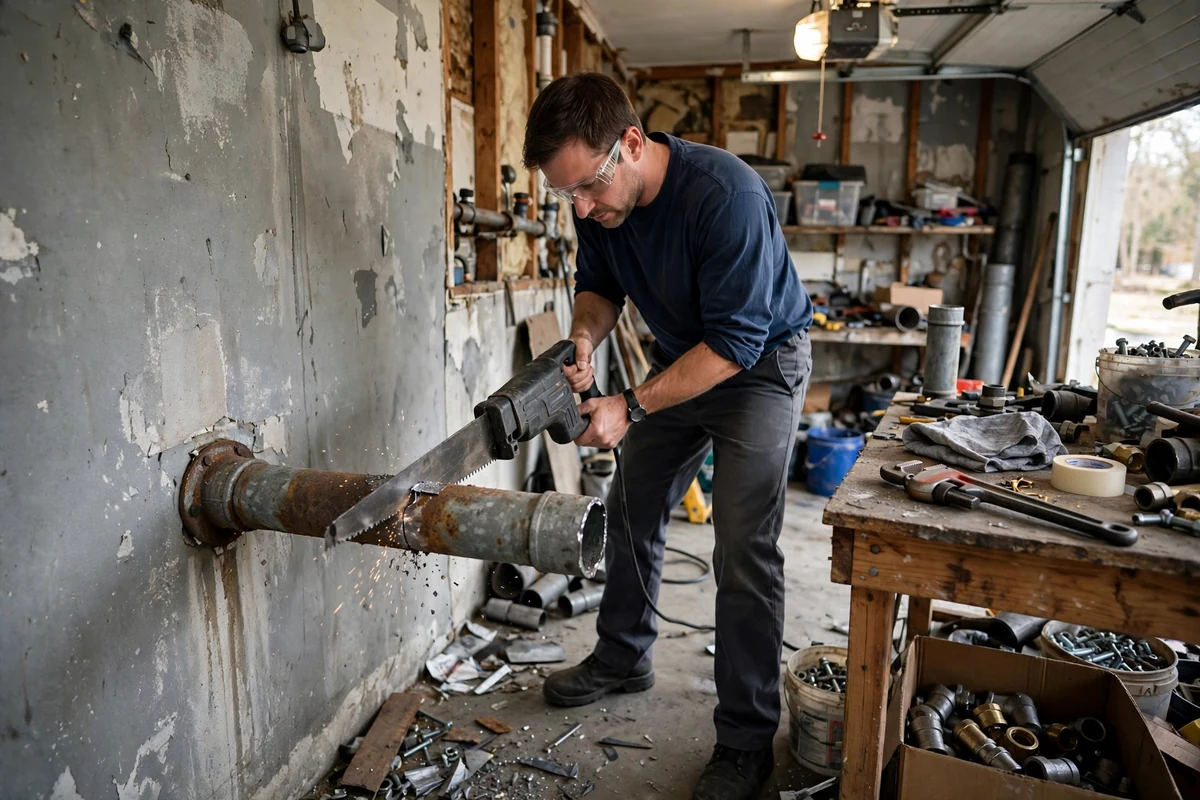
Replacement means running brand-new pipe alongside or in place of the old runs, then cutting the old system out of service for good. Here's the sequence.
Map the system
We trace every galvanized run, hot and cold, supply and branches, and plan new copper or PEX routes that use existing chases, closets, and attic or crawlspace paths to minimize openings.
Run the new pipe
New lines go in while the old system still carries water, so your home stays live through most of the job. PEX pulls in long continuous runs; copper is cut, fitted, and soldered or pressed section by section.
Cut over and test
We switch each fixture to the new pipe, pressure-test the full system, flush every line clean, and verify pressure at multiple fixtures. The old galvanized runs are capped and abandoned in place.
Patch and finish
Every wall and ceiling opening we made is patched back to a paint-ready finish. We vacuum the work areas, haul the old pipe away, and walk the house with you for a final check.
Copper or PEX: The Replacement Choice
Once the galvanized comes out, two materials earn the spot. Both outlast the steel they replace by a wide margin.
Copper
The premium, traditional repipe material. Copper resists corrosion far better than steel, handles heat, and has a service record measured in generations. It's the right call for homeowners who want the most proven material available and plan to stay in the home long term.
PEX
Flexible cross-linked polyethylene that snakes through walls with far fewer joints and fittings, and every joint you skip is a leak point you never create. It resists scale, won't corrode, and installs faster, which keeps the job cleaner and shorter.
We also replace the buried water service line when it's the same vintage galvanized, there's no point in beautiful new indoor plumbing fed by a rusting line from the street. And if your street pressure runs high, we'll check it during the job; a pressure regulator protects the entire new system from day one.
A small leak never stays small. Call before a pinhole becomes a flood.
Call (562) 245-5416The honest math on patching vs. replacing
Patching a galvanized leak is cheaper today, nobody disputes that. But galvanized fails system-wide, not spot by spot. Homeowners who patch usually call us back within a year or two for the next pinhole, then the next. Replacement costs more once and ends the cycle; patching costs less each time and never ends. We'll give you both numbers and let you decide with clear eyes.
Galvanized Pipe Questions
What Lakewood homeowners ask about their old steel plumbing.
How do I know if my home has galvanized pipes?
Scratch a visible pipe with a coin: galvanized steel shows a dull gray color and feels hard, and a magnet will stick to it. Copper shows a coppery color and a magnet won't stick. If your Lakewood home was built in the early 1950s and the plumbing was never updated, galvanized steel is the likely original material.
Can galvanized pipes be repaired, or do they have to be replaced?
Individual leaks can be patched, but the corrosion inside galvanized pipe is system-wide, fixing one spot does nothing for the rest of the run. Once a galvanized system starts failing, replacement with copper or PEX is the repair that actually ends the problem.
Does replacing galvanized pipe require tearing open all my walls?
We plan the new runs to reuse existing chases, closets, and attic or crawlspace paths, so wall openings stay small and few. Every opening we make gets patched back to paint-ready. Most homes need far less demolition than owners expect.
Will new pipes fix my low water pressure?
If the low pressure comes from corrosion narrowing your galvanized lines, the most common cause in older Lakewood homes, yes. New copper or PEX restores the pipe's full inside diameter, and pressure comes back at every fixture. We test pressure before and after so you can feel the difference and see it on the gauge.
How long does a galvanized pipe replacement take?
A typical single-story home takes two to three days: one to two days to run the new pipe, then cutover, testing, and patching. You keep water service through most of the work, the shutoff happens only during the final cutover.
Is galvanized pipe dangerous to drink from?
Galvanized steel itself isn't classified as a health hazard the way lead is, but old galvanized lines can trap and release rust, sediment, and in some cases lead that collected from older upstream plumbing. The EPA's guidance on aging plumbing materials is worth reading, and replacing the lines removes the question entirely.
Your galvanized pipes had a good run. Time to retire them. We'll map your system, show you exactly what's failing, and replace it with pipe built for the next generation, not the last one.
Call (562) 245-5416Contact Lakewood Pipe Rescue
Reach out any time, a real person answers and gets help moving.
Call
(562) 245-5416
Emergency line, call any time.
Visit
4400 Ladoga Ave
Lakewood, CA 90713, USA
[email protected]
We reply within one business day.
Prefer to talk it through?
Call and describe what you're seeing, brown water, fading pressure, pinhole leaks in the walls. We'll tell you the safest next step before anyone rolls a truck.
Sources & Further Reading
Official references behind the facts on this page.
- U.S. Environmental Protection Agency, guidance on lead and aging plumbing materials in drinking water systems.
- City of Lakewood, CA, permits and inspections for repipe work.
- California State Water Resources Control Board, drinking water quality standards.
Links open official sources in a new tab. We re-check them yearly.