Water Line Replacement in Lakewood, CA
One break gets a repair. A line that keeps breaking gets replaced. Lakewood Pipe Rescue installs brand-new copper or PEX water service lines, so the leaks stop for good.
When Replacement Beats Another Repair
A water line repair fixes one problem spot. Replacement retires the whole line and starts fresh. Here's how we tell which one your home needs.
The breaks keep coming
One repair this year, another next spring, a third on the other side of the yard. When leaks show up in different spots along the same run, the pipe itself is failing, patching spots just moves the next break down the calendar.
The pipe is past its prime
Many Lakewood service lines went in with the original 1950s construction. Galvanized steel and thin-wall copper that old are living on borrowed time, corrosion thins the walls from the inside until pinholes and splits become routine.
Pressure has faded everywhere
When every faucet and showerhead in the house runs weak, the problem usually isn't the fixtures, it's mineral scale and corrosion choking the old line from the inside. A new line restores full flow, not just stops leaks.
Damage runs the full length
Roots have found the joints, soil movement has stressed long sections, or the pipe has settled and bellied in several places. When the weak spots outnumber the good ones, replacing the entire run is the honest fix.
Not sure which camp your line falls into? We inspect it, camera and pressure checks where the line allows, and lay out both options with straight talk. If a targeted water line repair will genuinely hold, we'll say so.
Hissing wall? Damp patch? Pressure drop? Call and we’ll help you figure out what’s happening.
Call (562) 245-5416Our Water Line Replacement Process
A new service line is a bigger job than a repair, so the process is deliberately careful, marked utilities, a clean trench, and a line that passes inspection before a shovelful of dirt goes back.
Survey and mark
We trace the existing line, mark every utility in the path, and choose the route, open trench or trenchless pull-through, that disturbs the least ground.
Dig and lay
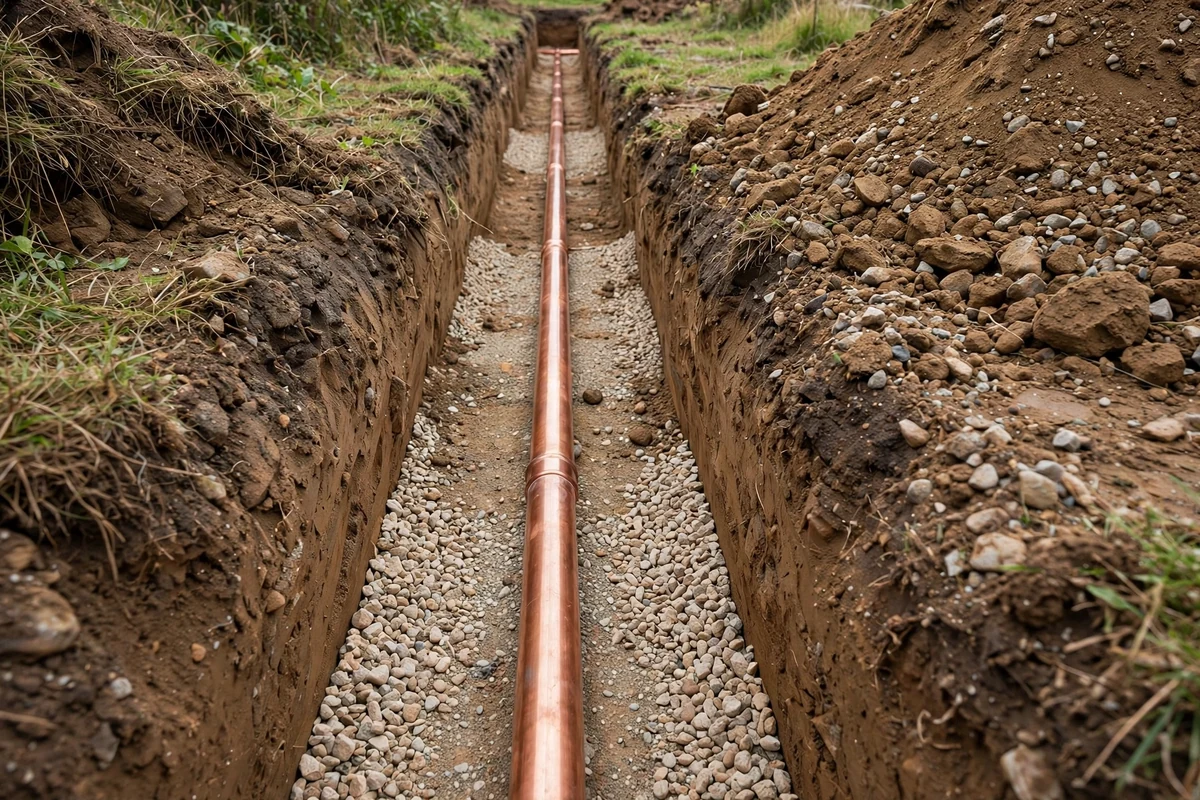
One narrow trench goes in along the route. The new copper or PEX line is bedded in clean sand, pitched and supported correctly, with proper fittings at the meter and the house.
Test and inspect
The new line is pressure-tested and flushed, then the city inspector signs off. Nothing gets buried until the test and the inspection both pass.
Backfill and restore
We backfill in lifts, compact as we go, and leave the grade clean and level. Hardscape we had to cut is patched; the yard looks like a trench was there, not a construction site.
Copper or PEX: Which Line Is Right for Your Home?
Both materials carry full code approval for underground service lines. The choice comes down to your soil, your water, and the path the line takes.
Copper service lines
The traditional choice and still an excellent one. Copper is rigid, holds its shape in the trench, shrugs off heat and sunlight where it rises above ground, and has a track record measured in generations. In stable soil with neutral water chemistry, a properly installed copper line is about as dependable as plumbing gets.
PEX service lines
Cross-linked polyethylene goes in as one continuous run with far fewer buried joints, and every buried joint is a future leak point you just avoided. It resists scale buildup and corrosion, flexes with minor ground movement instead of cracking, and pulls beautifully through trenchless installations.
We'll recommend one based on what we see at your property, not on which one we happen to have more of on the truck. Either way, the line we install is sized for your home's demand and protected at every penetration and connection.
Hissing wall? Damp patch? Pressure drop? Call and we’ll help you figure out what’s happening.
Call (562) 245-5416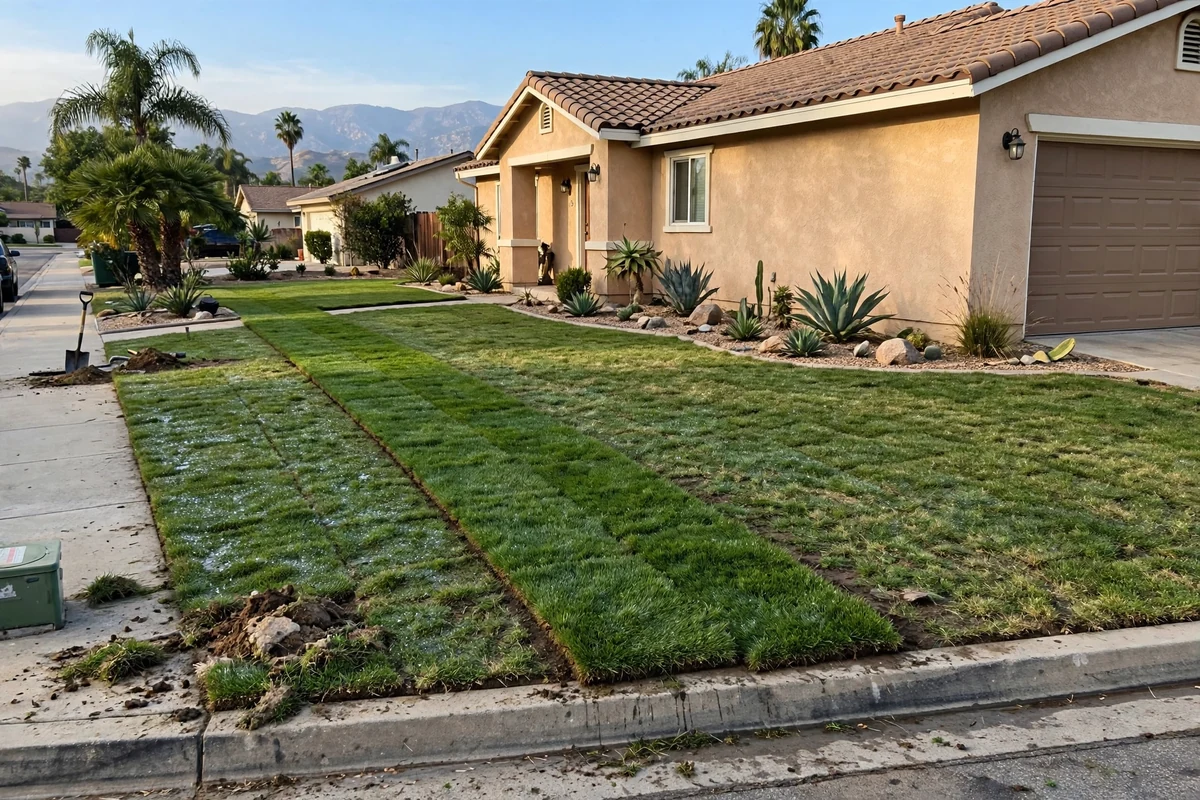
What Happens on Replacement Day
Most homeowners are surprised by how contained the work is. Here's the honest picture, start to finish.
Your water will be off for part of the day
We coordinate the shutoff with you in advance and keep it as short as the job allows, usually a few hours while we cut over from the old line to the new one. Fill a few jugs the night before and plan around it like a scheduled outage.
One trench, not a torn-up yard
The excavation follows a single narrow path from the meter to the house. We protect the landscaping along the route, set aside sod and plants where we can, and keep equipment off the rest of the yard.
Permits and inspection are on us
Service line replacement needs a city permit and an inspection before backfill. We pull the paperwork, meet the inspector, and handle any corrections, you don't make a single trip to city hall.
We think about pressure, too
A new line is the perfect time to check what your street pressure is doing to your plumbing. If readings run hot, a water pressure regulator installation protects the new line, and every fixture behind it, from the start.
If your indoor plumbing is as old as the service line, ask us about whole-house repiping while we're there. Doing both together is often simpler than coming back later, and it means every drop of water in your home travels through new pipe.
Water Line Replacement Questions
What homeowners ask before they commit to a new line.
How is water line replacement different from water line repair?
Repair fixes one break, a cracked section, a bad joint, a single leak. Replacement installs a brand-new service line from the meter to your home and retires the old one. When the line is old, corroded, or breaking repeatedly, replacing the whole run costs less over time than repairing it break by break.
How do I know my water line needs replacing instead of another repair?
The clearest signs are repeat breaks in different spots, pipe material past its service life (galvanized steel or thin-wall copper from the 1950s), widespread low pressure from internal corrosion, and visible damage along most of the line's run. We inspect the line and give you a straight recommendation, repair if it makes sense, replacement if it doesn't.
Will you have to dig up my whole yard?
We dig one narrow trench along the line's path, not the whole yard. Where the layout allows, we use trenchless pull-through methods that need only two small pits. The trench is backfilled and compacted the same day, and the yard is left graded and clean.
How long does a water line replacement take?
Most residential replacements are done in one day. Longer runs, deep lines, or tricky utility crossings can stretch into a second day. You will know the plan before we start, including when your water goes off and when it comes back on.
Do you handle the permit and the inspection?
Yes. Water service replacement requires a permit and a city inspection in Lakewood and the surrounding cities. We pull the permit, schedule the inspection, and make sure the new line passes before we backfill.
Should the new line be copper or PEX?
Both are excellent for service lines. Copper is rigid, proven, and handles sunlight and heat well above ground. PEX is flexible, resists scale and corrosion, and installs fast in long runs. We recommend one or the other based on your soil, your water chemistry, and the path the line takes, not on habit.
One new line. No more surprise breaks. Tell us what's happening with your water line and we'll tell you honestly whether it needs a repair or a full replacement.
Call (562) 245-5416Contact Lakewood Pipe Rescue
Reach out any time, a real person answers and gets help moving.
Call
(562) 245-5416
Emergency line, call any time.
Visit
4400 Ladoga Ave
Lakewood, CA 90713, USA
[email protected]
We reply within one business day.
Prefer to talk it through?
Call and describe what you're seeing, repeat breaks, rust-colored water, pressure that keeps fading. We'll tell you the safest next step before anyone rolls a truck.
Sources & Further Reading
Official references behind the facts on this page.
- U.S. Environmental Protection Agency, drinking water and service line guidance.
- City of Lakewood, CA, permits and inspections for water service work.
- California State Water Resources Control Board, drinking water standards and service line information.
Links open official sources in a new tab. We re-check them yearly.