Slab Leak Repair in Lakewood, CA
A leak under your slab foundation is the one you can't see and can't ignore. We locate it electronically through the concrete, then repair or reroute the line, with the least disruption possible.
Warning signs of a slab leak
Slab leaks hide by nature. These are the clues that give them away, learn them, and you catch the problem months before it becomes structural.
Warm spots on the floor
One patch of tile, wood, or laminate that feels noticeably warmer than the surrounding floor is the classic sign of a hot-water line leaking beneath the slab. Your bare feet may notice it before anything else does.
The sound of running water
Press your ear to the floor in a quiet house with every fixture off. A faint rushing or hissing from below means pressurized water is escaping somewhere under the concrete.
Water bills climbing without cause
An under-slab leak runs around the clock. When the bill jumps and your usage hasn't changed, a hidden line, often beneath the slab, is one of the first suspects.
Damp flooring or baseboards
Carpet that stays damp in one area, laminate edges that cup, or baseboards that swell and pull away, water is wicking up from below and arriving at the surface far from the break.
Cracks in floors or walls
Water under a slab erodes the soil beneath it. As support shifts, the slab can settle or heave, opening cracks in flooring, walls, or the slab edge itself. New cracks plus any sign above deserve immediate attention.
Pressure dropping, water heater working harder
A hot-side slab leak vents pressure continuously and forces the water heater to run constantly to replace lost hot water. Higher energy use with lower pressure is a telling combination.
Hissing wall? Damp patch? Pressure drop? Call and we’ll help you figure out what’s happening.
Call (562) 245-5416How we detect leaks under a slab
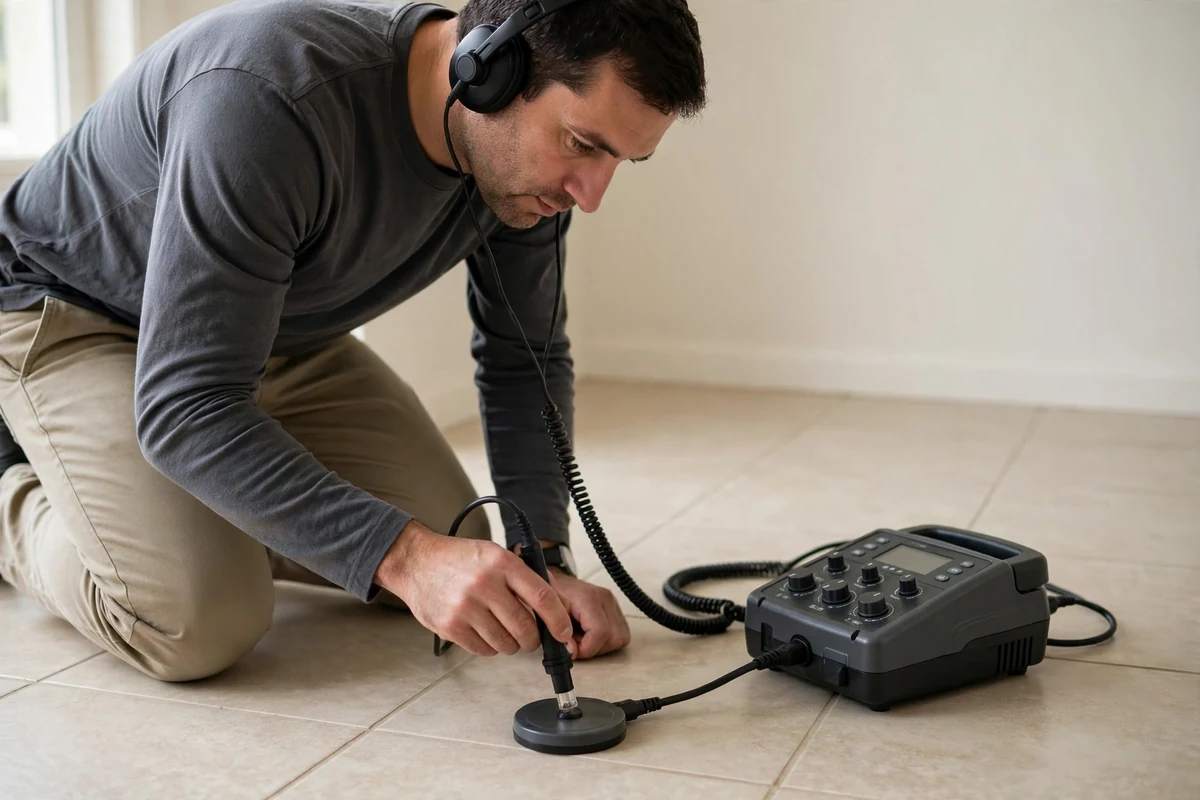
You can't see through concrete, but sound and heat pass right through it, and our equipment reads both.
Electronic acoustic listening is the workhorse. Pressurized water escaping a pipe under the slab creates vibration and sound that travel up through the concrete. Our listening equipment isolates that signal from background noise and grows louder as we close in, letting us mark the leak's position on the floor within inches.
Thermal imaging confirms it. A hot-water leak warms the slab above it; a cold-water leak shows as a cool anomaly. The camera paints the pattern across the floor, and when the thermal signature sits on top of the acoustic peak, we know we've found the source, not a damp patch the water traveled to.
Meter and pressure checks complete the picture. Isolating the hot and cold sides tells us which line is leaking before we ever mark the floor. That matters: it decides whether the repair targets the hot run, the cold run, and which reroute path makes sense.
Our full burst pipe leak detection toolkit backs up every slab diagnosis, so a wall leak never gets mistaken for a slab leak, or the reverse.
Slab leak repair options
Once the leak is located, there are two honest ways to fix it. We recommend the one your pipe's condition actually calls for.
Spot repair through the slab
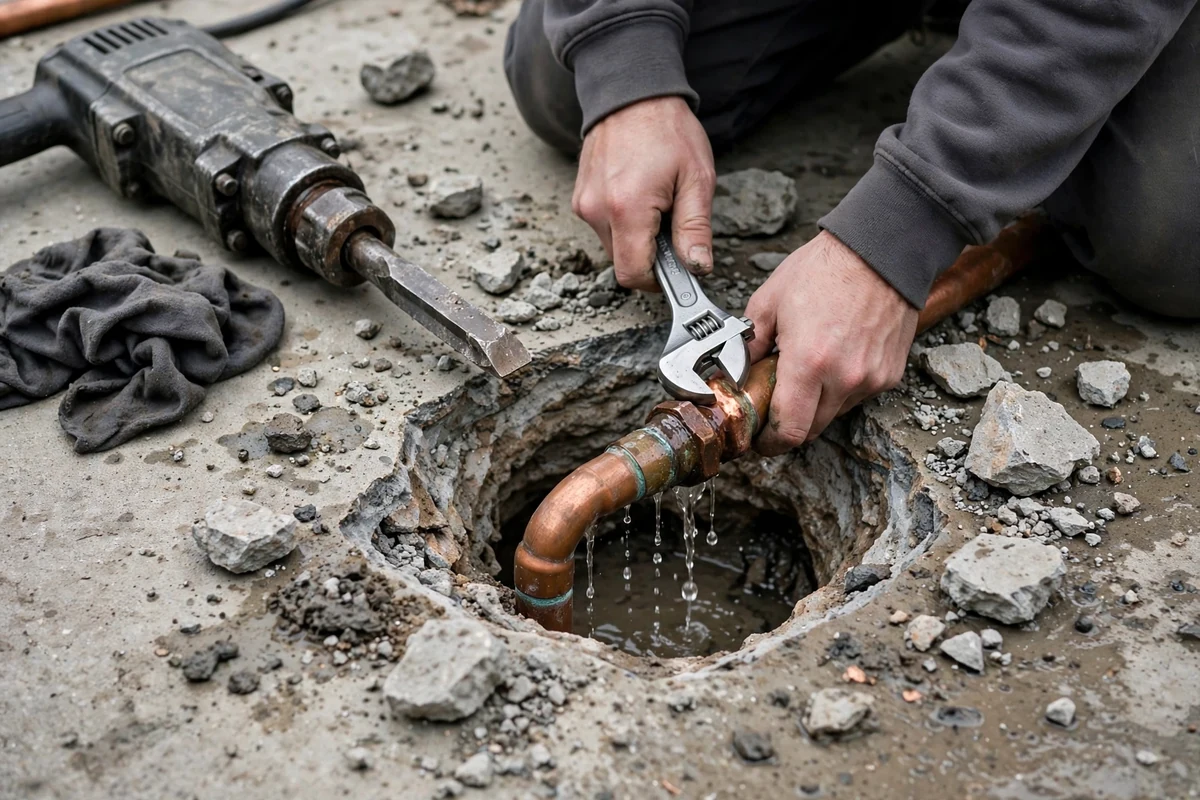
We open the concrete at the marked location, a controlled, contained opening, expose the failed section, and repair or replace it. Best when the rest of the under-slab line is in sound condition. The concrete is patched back and the floor restored.
Overhead reroute
The leaking under-slab line is abandoned, and a new line is run through the walls or attic above to serve the same fixtures. No concrete is broken at all. This is the better choice when the old line is corroded along its length or has leaked before.
Why we sometimes recommend the reroute
A spot repair fixes one failure. If the line under your slab is aging copper with thinning walls, the next section can fail six months later, and then you're opening concrete again. A reroute retires the whole problem line in one job.
What we won't do
We won't open your slab on a guess, and we won't sell you a reroute when a sound line just needs one clean repair. Detection comes first, the evidence decides, and you approve the plan before anything is cut.
What a slab leak does if you wait
Water under a foundation is patient. It doesn't need to be dramatic to do real damage.
A running leak erodes the soil beneath the slab, and soil is what holds your foundation level. As it washes away, sections of slab settle or heave, doors start sticking, cracks open in walls and flooring, and the repair bill grows from a plumbing job into a foundation conversation.
Meanwhile, trapped moisture feeds mold inside wall bases and flooring, and a hot-side leak runs your water heater around the clock. Every one of these costs more the longer the water flows.
The fix is a detection visit, one appointment that tells you exactly what's happening under your floor. If the leak turns out to be in the walls instead, our copper pipe repair team handles it; if the whole system is aging out, whole-house repiping may be the honest answer. Homeowners across our service areas get the same straight diagnosis.
Don’t wait for the flood. One call gets help moving to your door.
Call (562) 245-5416Suspect a slab leak right now?
Do the quiet-house test: turn off every fixture and listen at the floor. Then check your water meter, if the dial moves with everything off, water is escaping. Shut off the main valve to stop the damage from spreading, and call (562) 245-5416. We'll take it from there.
Slab leak questions
What homeowners ask before we roll the detection gear.
What are the warning signs of a slab leak?
Watch for damp patches spreading across the floor, water sounds with every fixture shut, a bill that keeps climbing, cracked tile or buckling baseboards, and faucets that lost their pressure. A hot-water slab leak often announces itself as one patch of floor that feels noticeably warmer than the rest.
How do you find a leak under a concrete slab?
We combine electronic acoustic listening, which picks up the sound of escaping water through the concrete, with thermal imaging that reveals warm or cool patterns on the slab surface. Cross-checking both readings lets us mark the leak's location within inches before any concrete is opened.
Do you have to break through my floor to fix a slab leak?
Not always. The two main options are a spot repair, where we open the slab at the marked location and fix the failed section, or a reroute, where we abandon the under-slab line and run a new pipe through the walls or attic above. Rerouting avoids breaking concrete entirely.
Which is better: spot repair or rerouting the line?
It depends on the pipe's condition. A spot repair works well when the rest of the under-slab line is sound. A reroute is the smarter choice when the line shows widespread corrosion or has leaked before, because another section of the same old pipe is likely to fail next.
Can a slab leak damage my foundation?
Left running, yes. Water under a slab can erode the soil supporting it, cause the slab to settle or heave, and feed mold inside the home. That is why the signs, warm floors, rising bills, the sound of running water, deserve a prompt detection visit.
Should I shut off my water if I suspect a slab leak?
If the signs are strong, audible running water, spreading dampness, a spinning meter, shutting off the main valve stops the damage from getting worse while you wait for us. If you cannot find the valve, call us and we will talk you through it.
Your slab can't wait out a leak. Water under concrete only gets more expensive with time. Let us locate it precisely and lay out the fix.
Call (562) 245-5416Contact Lakewood Pipe Rescue
Reach out any time, a real person answers and gets help moving.
Call
(562) 245-5416
Emergency line, call any time.
Visit
4400 Ladoga Ave
Lakewood, CA 90713, USA
[email protected]
We reply within one business day.
Prefer to talk it through?
Call and describe what you're noticing, a warm patch of floor, water sounds with everything off, a bill that jumped. We'll tell you the safest next step before anyone rolls a truck.
Sources & Further Reading
Official references behind the facts on this page.
- U.S. EPA, Fix a Leak Week, household leak facts and the meter check.
- City of Lakewood, CA, local building and permit information.
Links open official sources in a new tab. We re-check them yearly.